Marcio_edney_Gemini_Generated_Image_pbggz4pbggz4pbgg_1778120192_2895feeb
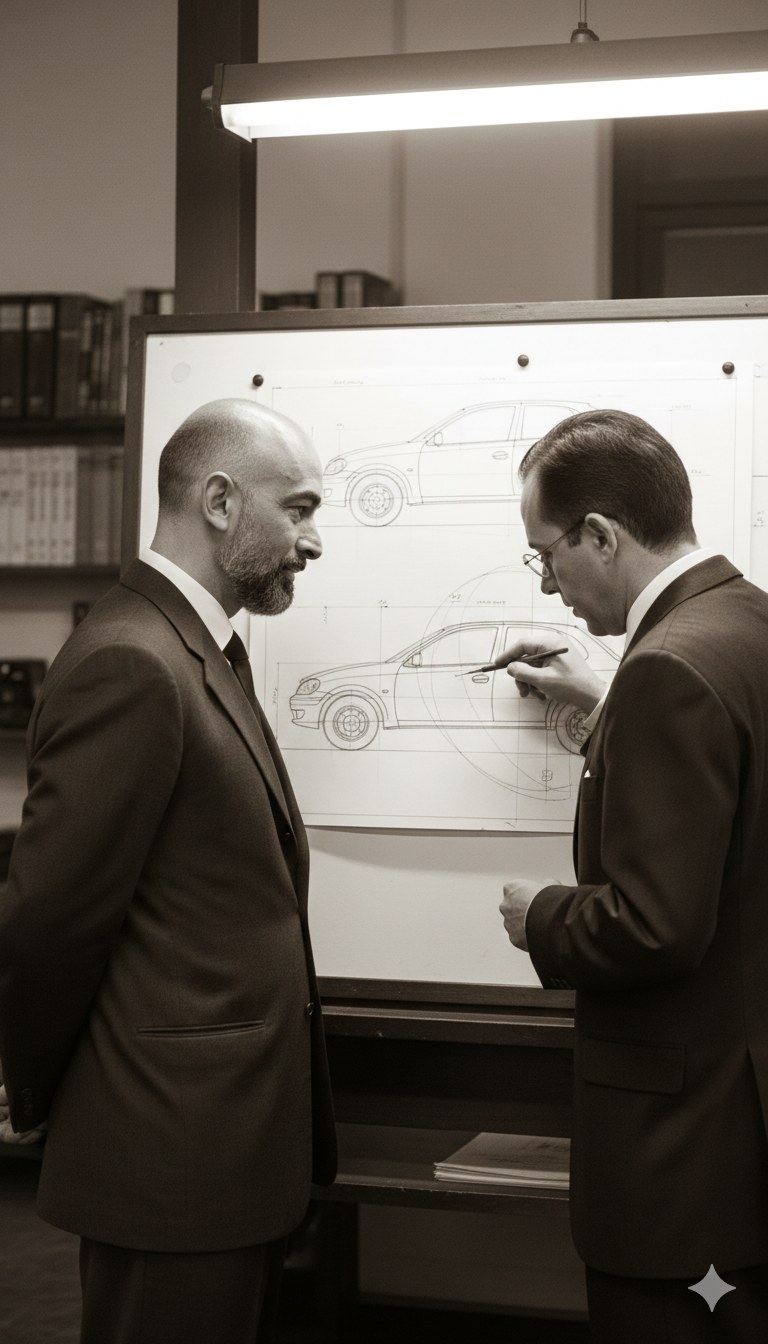
Create a detailed image of the designers in front of the painting, completing the development of the 2003 Celta design.
Use the submitted photo as a mandatory identity reference. Maintain 100% of the person's original characteristics, including gender: same face, bone structure, proportions, apparent age, gender, ethnicity, skin tone and texture, eye shape, nose, lips, eyebrows, hair (color, volume, hairline, texture) and natural features, exactly as in the submitted photo.
1. The Environment
Location: A project room or technical engineering office.
Surrounding Objects: The central element is a large-format technical drawing board, equipped with a parallel ruler or drawing machine on the left. On the paper, sketches of the vehicle are visible in side and top views.
Depth and Context: The depth is shallow, focusing on the immediate interaction between the people and the project. The context is that of conception and technical review, where abstract ideas are transformed into geometric specifications.
2. The Lighting
Type and Direction: Artificial interior lighting, coming from above and from the left.
Intensity and Shadows: The light is clear on the paper, allowing the fine lines of the drawing to be seen. Soft shadows shape the characters' faces and the folds of their clothing.
Atmosphere: An atmosphere of intellectual focus and seriousness, typical of a highly specialized technical environment.
3. The Setting
Predominant Colors: Grayscale with sepia tones, giving it a documentary and historical character.
Style and Era: Late 1930s. The style is sober, reflecting the functionalist and industrial aesthetics of the time.
Atmosphere: Of strategic collaboration. It is the moment of "mentoring" or final decision on the components that we have seen being manufactured and tested in the previous images.
4. The Characters
There are two men in profile, focused on their work:
Character on the Left: Man in the photo. He wears a dark suit jacket, white shirt, and dark tie. His posture is upright and receptive.
Character on the Right: A man who appears to be explaining the project. He wears thin-rimmed glasses and a dark formal suit similar to his colleague's. He is leaning forward, pointing to a specific detail on the plan.
5. Facial Expressions and Body Language
Facial Expression (Left): His gaze is attentive and analytical, directed towards where his colleague is pointing. His mouth is closed, suggesting a state of active listening and evaluation.
Facial Expression (Right): His face is partially hidden, but his posture indicates technical authority and persuasiveness.
Body Language: The interaction of the hands is key. The man on the right uses an instrument or his own finger to highlight a curve in the chassis, while the one on the left maintains a posture of critical observer. The physical proximity indicates a close and trusting working relationship.